
D-types - The Sadist (Ethical Intensity)
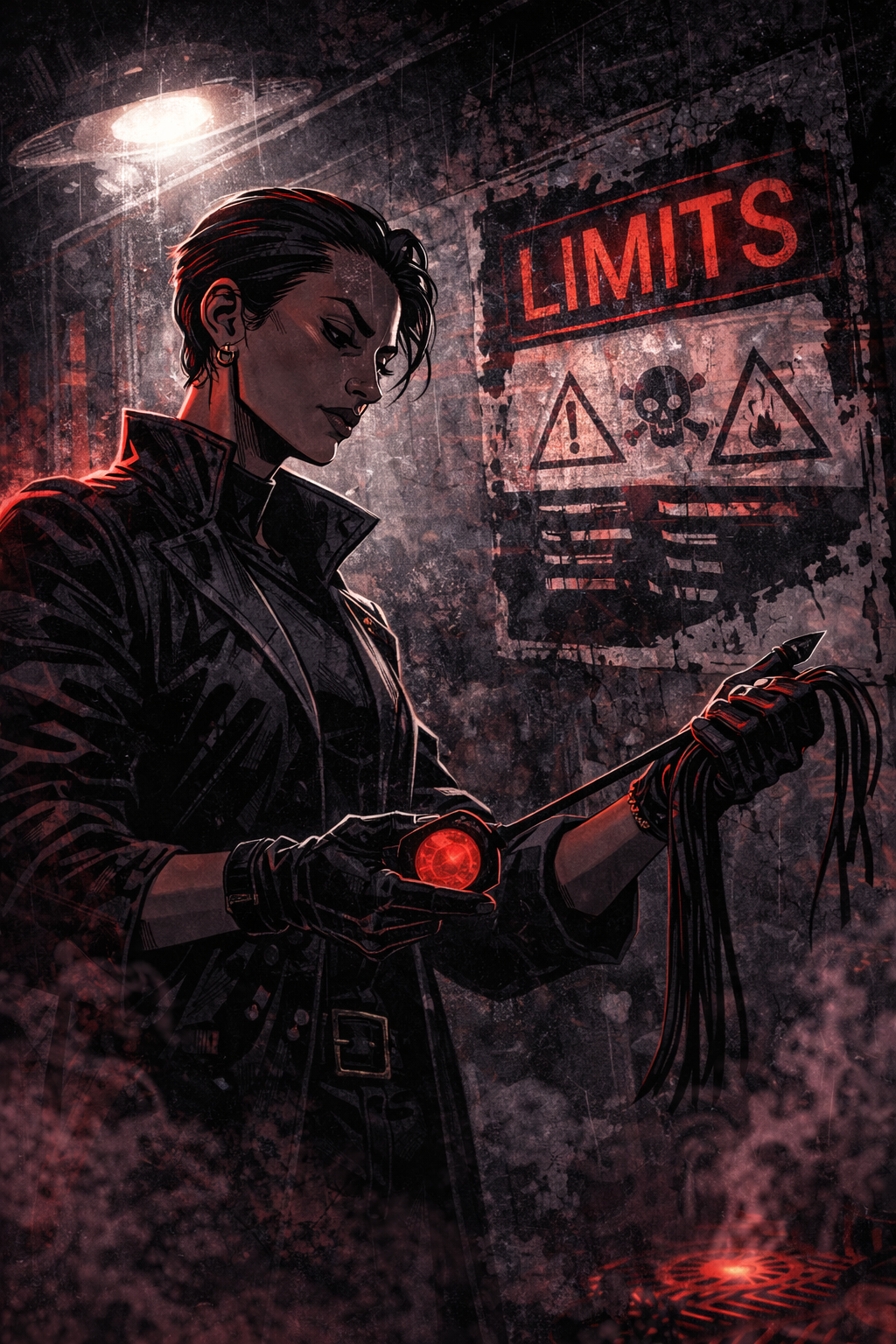
Intensity is not the same thing as harm.
The Ethical Sadist knows this the way a surgeon knows the difference between a cut that saves and a cut that wounds. Not because they are cold—because they are precise.
This type is often misunderstood by people who think “sadist” means “cruel.” It doesn’t. Not here. Not when it’s done with consent sharp enough to shave with, and care sturdy enough to hold what you wake up in someone.
The Ethical Sadist is turned on by intensity, yes—but what makes them powerful is that they can frame that intensity inside boundaries that don’t bend just because desire gets loud.
They don’t want chaos. They want control. They want the exquisite honesty of sensation delivered with intention.
How you lead
You lead by orchestrating intensity within explicit limits.
You build a container where pain, fear, endurance, or overwhelm can be explored as play—not as an accident. You lead by pacing, by reading the body, by tracking the nervous system like a practiced observer.
You do not chase escalation to prove anything. You choose escalation because it’s agreed, measured, and meaningful.
Verbal leadership samples
Opening the scene
“We’re going to play with intensity. We’re going to do it safely.”
“Your safeword is power. Use it if you need it.”
“You tell me the truth, and I’ll take you exactly as far as we agreed.”
Consent-forward intensity (still sexy)
“Tell me what kind of pain you want: sting, thud, burn, pressure.”
“Do you want more, less, or different?”
“Color.”
Pacing and restraint
“Breathe and hold still.”
“Not yet. We’re building.”
“You don’t get to rush me into the edge.”
“I decide the pace. You decide if we continue.”
Praise that keeps someone in it
“Good. You’re doing beautifully.”
“That’s it. Stay with me.”
“You can take this. And you can stop it.”
Correction (only what you negotiated)
“Hands where I put them.”
“Hold still. Take it clean.”
“If you need yellow, you say it now.”
Ending / landing
“We’re done. Breathe. Look at me.”
“You did well. I’m here.”
“Water. Warmth. Then we talk.”
Physical leadership samples
The implement as symbol
Clean tools, deliberate handling, no frantic grabbing.
You show the implement first—like a contract made visible.
You place it down and pick it up with intention. It signals control.
Reading the body
Watching breath, skin response, micro-flinches, trembling.
Feeling tension in shoulders, jaw, hands.
Knowing the difference between “edge” and “too far” before words appear.
Pacing control
Set rounds: intensity, pause, intensity, pause.
Stillness between strikes or sensations—space for the nervous system to catch up.
Changing location, changing tool, changing rhythm before fatigue becomes danger.
Containment touch
A steady hand at the back of the neck.
Two fingers under the chin to bring them back to you.
A palm on the sternum: breathe into my hand.
Micro-scripts (physical + verbal paired)
Permission to continue
Physical: hold still, eye contact, hand to chest
Verbal: “Color. Do you want more?”
Restraint as dominance
Physical: set the tool down, step close, stillness
Verbal: “Not yet. You’re going to wait.”
Edge moment
Physical: slow pressure at shoulder or jaw
Verbal: “Stay with me. Breathe. You’re safe.”
Stop and land
Physical: remove intensity, wrap warmth/hold steady
Verbal: “We’re done. You did enough. I’ve got you.”
Sadist Do’s and Don’ts
Do
Negotiate specifics (tools, areas, intensity caps, time caps).
Use “yellow” as an action cue: reduce/change immediately.
Keep aftercare planned and non-optional.
Treat tools like instruments: clean, deliberate, respected.
Debrief and document what you learned.
Don’t
Escalate to satisfy ego.
Treat endurance as proof of worth.
Ignore subtle “yellow” signals because words haven’t happened yet.
Play when you’re dysregulated or angry.
Use humiliation, fear, or degradation without explicit consent and language lists.
Optimizing for
Charge and catharsis
Precision and pacing
Intensity that feels “earned”
Consent as a living, active thing
Nervous-system mastery, not brute force
At your best
You create an edge that feels like transcendence, not danger.
Your partner trusts you because your restraint is obvious.
You can bring someone to the brink and back again without breaking them.
Your dominance feels clean: appetite guided by responsibility.
Your ideal partner inputs
You thrive with partners who offer:
Clear communication and willingness to use signals
Honest limits and hard boundaries (not bravado)
Curiosity about pacing (not only escalation)
Commitment to aftercare and debrief, not just the high
You need
A detailed yes/no/maybe list (tools, body areas, language, intensity)
Signals that work in the moment (color system, hand taps, squeeze)
Clear stop conditions (time limit, body response, fatigue indicators)
Aftercare resources ready: water, warmth, quiet, reassurance, space
Under stress
You may chase escalation.
Stress can make intensity feel like an itch you need to scratch. You may want “more” to soothe your own agitation. That’s when you stop being an artist and start being hungry.
You may also get tunnel vision—focused on the plan, ignoring the body’s subtle warnings.
When you’re most dangerous
When appetite outruns attunement.
When you begin to think “they can take it” means “I get to give it.” When you interpret silence as consent. When you treat “yellow” as negotiation instead of an instruction to change.
You are most dangerous when you stop being curious and start being certain.
Try this
1) The Intensity Ladder
Before you start, agree on levels:
Level 1: warm-up
Level 2: engaged intensity
Level 3: edge
Choose a cap for the scene. Stay under it at least once. Teach your body restraint.
2) The Round System
Run intensity in rounds:
60–90 seconds of play
20–40 seconds of stillness and breath
Ask: “Color. More, less, or different?”
This reduces surprises and builds trust.
3) The “Yellow Protocol”
Decide in advance what yellow means in actions:
reduce intensity by X
change tool
change location
pause for water
No debate. Yellow is not a conversation; it’s a switch.
Words you can steal
“Your safeword is power.”
“I decide the pace. You decide if we continue.”
“Color.”
“Not yet. We’re building.”
“Tell me: more, less, or different.”
“You can stop this at any time, and you will still be good.”
“I’m not here to break you. I’m here to take you to the edge and bring you back.”
Getting Better Checklist
Build an intensity ladder (warm-up / engaged / edge) with a cap you actually honor.
Use rounds (play / pause / check-in) to prevent tunnel vision.
Define what yellow means in actions (reduce, switch tool, pause, water).
Treat tools as instruments: clean, deliberate, no improvisation.
Make aftercare part of the scene design: landing is not optional.