
D-types - The Protector / Guardian
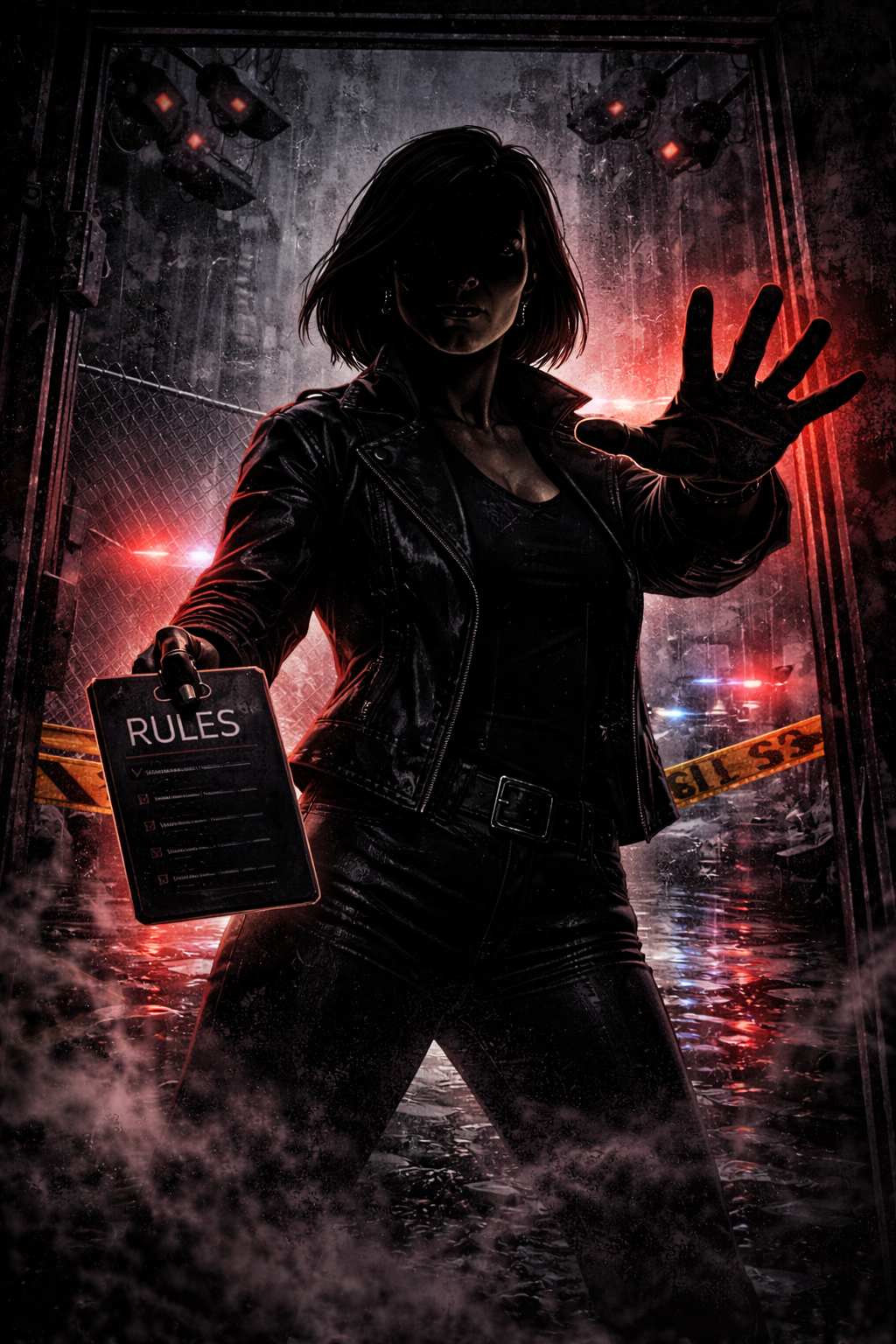
Safety isn’t the absence of danger. It’s the presence of someone who knows exactly what they’re doing.
The Protector is not romance. The Protector is infrastructure.
They are the one who checks the door without making a show of it. The one who notices the cameras and the exits and the way the room shifts when certain people enter. Their dominance is not built from swagger—it is built from responsibility. From the calm refusal to allow chaos to take what it wants.
A Guardian Dominant leads by building a container sturdy enough that someone else can fall apart inside it and still be safe. That’s the real magic: not intensity, but reliability. Not fearlessness, but preparation.
How you lead
You lead by being the boundary that holds.
You don’t just say “stop.” You make “stop” feel like a promise that will be kept. You lead through prevention: through rules that exist before the moment gets messy, through clear signals, and through a readiness to pause the scene without ego.
Your authority feels like: nothing gets past me.
Verbal leadership samples
Opening the container
“Before we start, we’re agreeing on what ‘safe’ means tonight.”
“If I pause the scene, it’s not a question. It’s care.”
“You can test the edge. I’ll hold the line.”
Rules that feel protective (not parental)
“If you feel yourself drifting, you tell me. I will not be disappointed.”
“Yellow means we change something immediately. No debate.”
“If I say stop, it’s because I’m keeping the agreement.”
Permission and pacing
“Wait for me.”
“Not past this point.”
“You can have more when I decide we’re ready.”
In-the-moment safety check-ins
“Look at me. Breathe. Color.”
“Hand squeeze if you’re still good.”
“Do you want more, less, or different?”
Ending / landing
“We’re landing now. Stay close.”
“You did well. I’ve got you.”
“We’re going to debrief after you’re settled.”
Physical leadership samples
The shield posture
Standing between your partner and the room.
A broad stance, calm shoulders, the body language of a locked gate.
Boundary gestures
The unmistakable “stop” hand.
Turning your body to block access—no aggression, just certainty.
A hand at the small of the back guiding them away from a risk without drama.
Safety as touch
Checking breath with a hand on ribs or sternum.
Testing muscle tension (shoulders, jaw) like reading a map.
Slow, deliberate contact that pulls them back into the present when they float.
Environmental control
Adjusting lighting, sound, temperature as part of the scene.
Positioning: where they kneel, where you stand, where the door is.
Removing objects that don’t belong in the container.
Micro-scripts (physical + verbal paired)
Pause
Physical: palm to chest, step in, steady eye contact
Verbal: “We’re slowing down. Breathe.”
Protect
Physical: move between partner and the room
Verbal: “Stay behind me.”
Regulate
Physical: hand on ribs, slow pressure
Verbal: “Match my breathing.”
Stop (clean and final)
Physical: stop hand + stillness
Verbal: “Stop. Scene is over. You’re safe.”
Protector Do’s and Don’ts
Do
Make agreements specific: what’s in-bounds, what’s out, what’s conditional.
Have an exit plan if the scene is public or travel-based.
Use pauses like a tool, not an apology.
Treat safety as sexy: competence is erotic.
Debrief like an engineer and a lover.
Don’t
Use “safety” as a way to control things you didn’t negotiate.
Punish someone for needing to stop.
Confuse vigilance with anxiety—hypervigilance isn’t leadership.
Make your partner earn basic care.
Forget your own limits while guarding theirs.
Optimizing for
Stability
Risk-awareness
Trust through consistency
Edge play with guardrails
“We can go far because we know how to come back”
At your best
Your partner relaxes because your “no” is trustworthy.
You create freedom by creating limits.
You can hold intensity without losing judgment.
You can switch from “predator” to “protector” in a heartbeat—without shattering the mood.
Your ideal partner inputs
You thrive with partners who offer:
Respect for pauses and boundaries (no bargaining mid-scene)
Honest communication when something shifts
A willingness to collaborate on safety, not fight it
Clarity about triggers, medical realities, trauma landmines, and hard limits
You need
Clear scope: what control covers, and what it doesn’t
Partners who treat consent signals as sacred, not negotiable
Enough time to plan (rushed scenes are when guardianship breaks)
Your own aftercare: someone who asks how you are, too
Under stress
You can become controlling.
Not in the fun way. In the “I must manage everything because something bad might happen” way. You may clamp down on uncertainty, overcorrect, or stop trusting your partner’s competence.
Sometimes you get so focused on protecting them that you forget to let them choose.
When you’re most dangerous
When protection turns into possession.
The Guardian’s shadow is paternalism: “I know what’s best,” “You can’t handle this,” “I decide because I’m keeping you safe.” That can steal agency and blur the line between negotiated authority and uninvited control.
You are most dangerous when you treat your fear as evidence.
Try this
1) The Safety Script (60 seconds)
Before the scene:
“Here’s what we’re doing.”
“Here’s what we’re not doing.”
“Here are the signals and what they mean.”
“Here’s what happens if we stop.”
Short, calm, absolute.
2) Guardrails for Edge
If you’re doing anything intense, choose:
a cap (max intensity)
a time limit (max duration)
a checkpoint (when you reassess)
Edge becomes safer when it has architecture.
3) The Debrief Ritual
After:
What felt best?
What felt risky?
What would we change next time?
Make it ordinary. Make it expected. That’s how you build trust that lasts.
Words you can steal
“If I pause us, it’s care. Not failure.”
“You can push the edge. I’ll hold the line.”
“Yellow changes something immediately.”
“Stop means stop. No consequences.”
“Stay behind me.”
“Breathe with me. Come back.”
“My job is the container. Your job is honesty.”
Getting Better Checklist
Negotiate a clear safety fence (what’s in, what’s out, what’s conditional).
Use a pause protocol: what you do immediately when you hear/see “yellow.”
Do a quick space scan (hazards, exits, privacy) as part of your pre-scene ritual.
Practice saying “stop” cleanly and kindly—no apology, no explanation mid-moment.
Build a debrief habit: risk moments, best moments, one change for next time.