
D-types - The Brat-Tamer
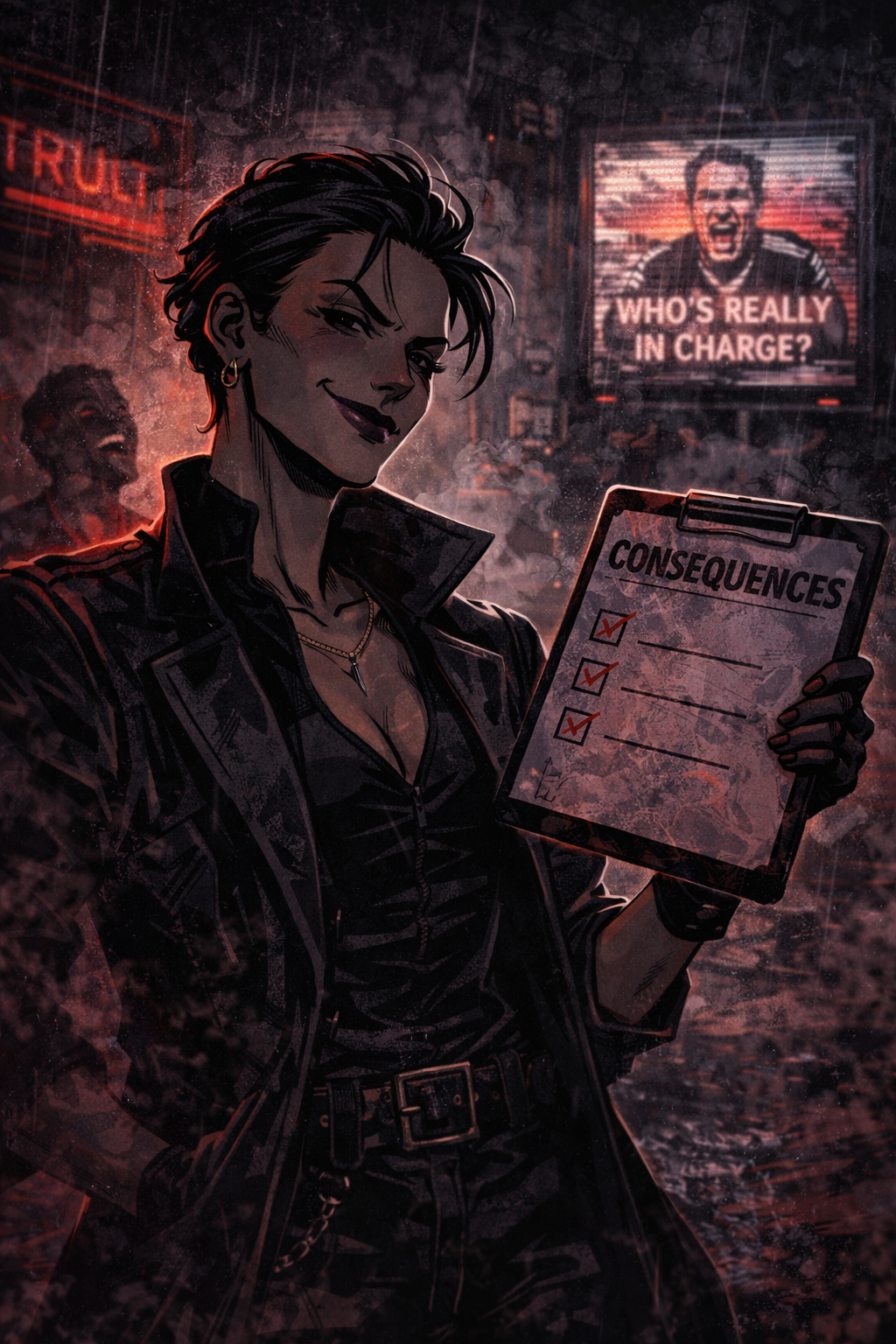
Some people want a throne.
You want a grin, a challenge, and the sweet satisfaction of winning without ever raising your voice.
The Brat-Tamer is dominance with a spark in it. You don’t just tolerate resistance—you invite it. You turn defiance into foreplay. You make trouble feel like an offering, and consequences feel like the price of admission.
But the power here isn’t in punishment. It’s in composure.
A true Brat-Tamer isn’t easily rattled. They don’t lose control just because someone is pushing buttons. They know which buttons are part of the game, and which ones are emergency exits. They know how to keep the fire playful without letting it burn the house down.
How you lead
You lead by turning challenge into structure.
You invite conflict inside a clearly negotiated container, then you win it with calm certainty. You set “game on” rules, define consequences, and maintain a steady tone even when someone is being deliciously difficult.
Your dominance feels like: You can try. And you will lose. And you’ll love it.
Verbal leadership samples
Opening the game
“We’re playing. Here are the rules.”
“You can be a brat—inside the container.”
“If you want consequences, earn them properly.”
Playful authority
“Careful. That makes me creative.”
“You’re adorable when you’re defiant.”
“Keep going. I’m taking notes.”
Clear consequence cues
“That’s one.”
“Strike two.”
“You just earned something.”
“Do it again and we escalate.”
Corrections (sharp, not cruel)
“Nope. Try again.”
“Not like that.”
“You don’t get to set the terms. You get to play by them.”
Check-ins that keep tone
“Color.”
“Is this still fun?”
“More playful, or more strict?”
Ending / landing
“Game off.”
“Come here. We’re done.”
“You did well. Breathe.”
Physical leadership samples
Composure as dominance
Stillness while they flail.
A slow step forward that makes their nervous system go quiet.
A single raised eyebrow—enough to reset the room.
Consequences as choreography
Taking their wrists gently and placing them where you want them.
Turning them to face the wall or kneel (if negotiated).
Removing privileges: touch, speech, movement—cleanly, calmly.
Playful restraint
Blocking access with your body or a hand.
Leaning in close to whisper, then stepping away.
Holding their chin, making eye contact, letting them feel caught.
Tone control
You don’t match their chaos. You frame it. That’s the point.
Micro-scripts (physical + verbal paired)
Strike
Physical: hold eye contact, small head tilt
Verbal: “That’s one.”
Escalate
Physical: step in, take wrists, stillness
Verbal: “Good. You just earned consequences.”
Reset
Physical: move them into position, pause
Verbal: “Try again. Properly.”
End
Physical: soften touch, shift posture, grounding hold
Verbal: “Game off. Come back to me.”
Brat-Tamer Do’s and Don’ts
Do
Define what counts as bratting and where it’s welcome.
Have a “consequence menu” agreed in advance.
Use clear game signals: “game on” and “game off.”
Keep consequences proportional and consistent.
Repair after: reconnect so conflict doesn’t linger as shame.
Don’t
Let bratting spill into real-life disrespect without consent.
Escalate because you feel personally challenged.
Use humiliation unless it’s explicitly negotiated.
Keep the game going when someone’s dysregulated.
Confuse “fun conflict” with “unresolved relationship tension.”
Optimizing for
Playful tension
Controlled escalation
Banter and power conflict inside a safe fence
Erotic consequences that feel earned
Laughter braided tightly with obedience
At your best
You’re unshakable. Your calm is intoxicating.
Your partner feels free to play because the container is clear.
You can turn resistance into surrender without force.
Your authority feels like confidence, not anger.
Your ideal partner inputs
You thrive with partners who offer:
Playful provocation with clear consent
Ability to respect “game off” instantly
Honesty about when it stops being fun
Delight in consequences rather than fear of them
You need
Agreed limits around disrespect, name-calling, and public behavior
A consequence menu (what’s on the table, what isn’t)
A reset ritual when things get too heated
Debriefs: what was hot, what hit wrong, what to change
Under stress
You can get hooked.
Under stress, a Brat-Tamer might start taking the brat personally—feeling “disrespected” instead of “invited.” You may escalate to win, not to play. You may stay in the conflict longer than is healthy because the adrenaline feels good.
That’s when the game turns into a real fight wearing a mask.
When you’re most dangerous
When you punish your feelings instead of correcting behavior.
If you’re angry, consequences can become retaliation. If you’re insecure, you can chase domination as proof. If you’re tired, you may confuse “brat energy” with “boundary testing” and clamp down too hard.
You’re most dangerous when you can’t tell the difference between play and pain.
Try this
1) The Consequence Menu
Before play, agree on 5–7 consequences with intensity levels:
Level 1: posture, stillness, counting, light correction
Level 2: privilege removal (speech/touch), longer holds, stronger correction
Level 3: negotiated impact/discipline (if applicable)
This turns chaos into choreography.
2) The “Is This Still Fun?” Check
Choose a phrase that doesn’t break tone:
“Still playful?”
“Still fun?”
Use it once mid-scene. It saves people from pushing past their edge just to keep the story going.
3) The Reset Ritual
If energy spikes too high:
pause
breathe together
restate the rule
Then continue or end. Your dominance is proven in your ability to regulate.
Words you can steal
“Careful. That makes me creative.”
“That’s one.”
“You just earned consequences.”
“Try again. Properly.”
“Is this still fun?”
“Game on.”
“Game off. Come back to me.”
Getting Better Checklist
Define “brat” clearly: what’s playful, what’s not, what’s out of bounds.
Create a consequence menu with intensity levels and stick to it.
Add one mid-scene check: “Still fun?” (it saves the whole dynamic).
Practice composure: don’t match chaos; frame it.
Repair at the end: consequences stop, connection returns.